The Killer Whale: The Ocean’s True Super Predator
Sharks, especially the most vicious shark in the world, the great white come to mind immediately when one mentions Godzilla of the ocean. But allow me to counter that with this question: what if I told you the real marine super predator isn’t actually even a shark? After all, the top-predators of the oceans are a particular type of “dolphins” – the killer-whales, or “orcas.” Top of the food chain (though grossly overshadowed by its illustrious cousin, the great white shark), orcas are not only intelligent; they are strong, and have devised some amazing hunting strategies to rule the seas. So therefore, how did these splendid beasts become the kings of the seas and acquire their strength?

Introduction: King of the Ocean
The ultimate predators of the sprawling mysterious ocean realm have always been noted as great white sharks, blue marlins and other larger fish. Unlike their cousins of yore, the colossal Megalodon sharks, and gigantic whales known as Leviathan Melvillei, which waged a battle against one another within moments in Earth’s vast prehistoric Jurassic Era, today’s killer whale-orca-has risen to primacy over its undersea domain and now has no rival that approaches its size or ferocity.
Unaided: Without need for a pen and paper, orcas are intelligent, organized and can devise complex strategies. And while these blubbery sea puhlip mammals may look a bit whale-ish, they haven’t associated closely with whales but with dolphins. That physical power coupled with their smart minds have proved them to be, no one but the real kings and queens of the ocean.
Title: The Orca Halo: A Story of Evolution and Intellect
How Have Orcas Become Top Predators?
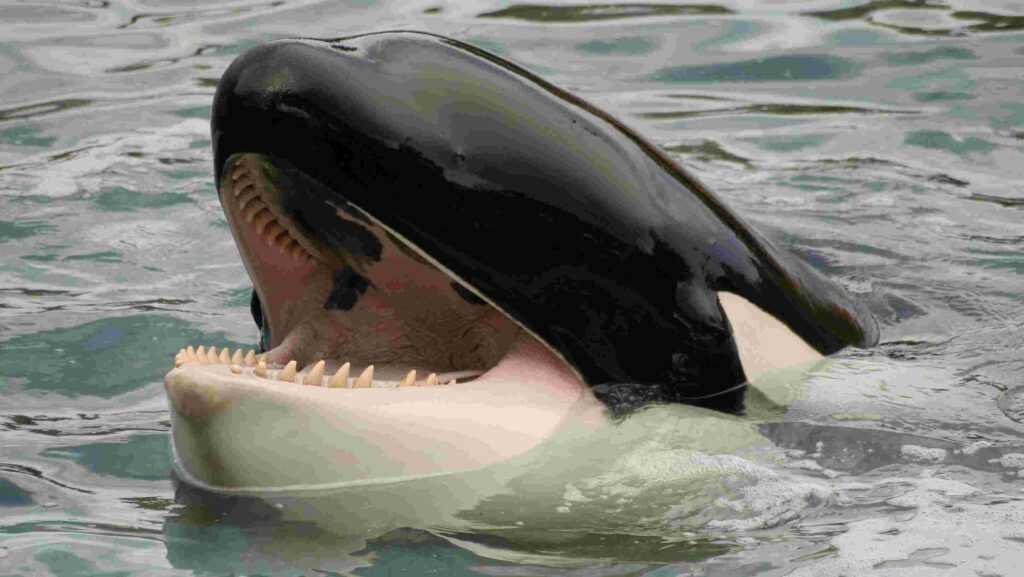
The killer whale (Orcinus orca), more simply referred to as the orca, is a toothed whale belonging to the family Delphinidae of the order Cetacea, which contains all whales, dolphins, and porpoises. The orca is identifiable by its distinctive black and white body and reaches an average adult length of 20 to 26 ft in males, compared with adults who range from around the age of 16 to about 23 ft long. As superb swimmers, they might hit speeds as high as 56 km/h, and their size, strength, and pack behavior renders this creature an unprecedented killing machine.
It is their intelligence that truly sets them impersonally apart from other marine predators in a general sense. On the contrary, killer whales have some of the most sophisticated brains in the animal kingdom. In some ways, their brains are more complicated than human brains–the parts that process emotion and social interaction have far greater complexity than ours. But by listening to one another’s distinctive calls and recognizing their own pods, scientists have found orcas can pick out family from hundreds of other whales swimming in the same ocean. As a matter of fact, every pod, or sort of family unit has their very own sound set — similar to dialect.
Strategies for Hunting: Pride in Brain Power
How Do Orcas Hunt?
The different and complex hunting strategies that orcas have are a true testament of their intelligence and working together. Sharks seem to have the brute strength, albeit some with native intuitiveness — but not like orcas who operate based on their own wise calculations. Here are some of the clever methods that orcas use to prey on various species of animals.
Seals and ice floes: Increasingly what one is doing when it comes to smaller hunts
One of the most well-known techniques that orcas have to hunt for food is how they use this technique to hunt seals. The seals, unaware of the mystery beneath the waves, often drag their bodies onto floating blocks of ice thinking they are safe from horrors. But the orcas have come up with a truly clever way of just getting underneath to move them. Orchila Island, Venezuela. A pod of orcas will work in concert to generate waves by pushing the ice at one end. When orcas can hit the ice with a force equivalent to that of an elephant and weigh as much as 20 tons, the ice tips under the unsuspecting seal evicted within moments and falling into the water making it easy meat for hungry orcas waiting below.
Shark Hunters: Beat the Great White
The great white shark is considered one of the deadliest in the sea जब अन्बु हीन सूरिस क सोंच ट य ख, लख उन हई जल क्राउ ले के मो त दी गक म जडह बट तू श त कर च II Well, this impressive predator is exposed to the new teeth and jaws, which gives it a comfortable place as one of the species that scares some vicious animals. The shark would not be in much of a position compared to tangling with an orca. This is because the great white sharks have a much stronger biting force than orcas, but the intelligence of the orca means they will strike at that point which has been found to be most vulnerable. As has been previously reported, orcas attack sharks by diving below and hitting their liver—this strategy disables the shark almost instantly. The orca meanwhile can hold its breath much longer and dive much deeper, so using that to clear out the area is pretty easy and then sealing the fate of the great white.
Blue Whale- Giant Killers of the party

Not even the largest animal on Earth is safe from the orca. If ever there was a pitch ya ready to swing for the fences, it would be killer whales hunting blue whales in some truly shocking group tactics. In most cases, it takes a group effort from the orcas to trap a blue whale, which is usually one that happens to be younger or weaker. They typically aim for the soft underbelly of the whale. You’d never think of orcas as taking down anything that large, but a pod working together is a different story.
The Pod Power: Orca Socialisation
What Makes Orcas One of Nature’s Top Predators?
The secret sauce is that orcas are gloriously advanced social creatures. Orcas are social creatures, living and hunting in family groups known as pods — a term used in the literature to describe everything from just a few members up to more than 40 individuals. Each pod is composed of a family group usually led by the oldest female; they all work together to keep each other alive.
Orcas are social animals and communicate within their pod. Orcas use clicks, whistles and pulsed calls when swimming in synchrony or strategizing to hunt. Every pod has its dialect that identifies not only them between one another but also helps the orcas stay away from other pods.
They’re also incredibly empathetic and look after one another, from sharing food with each other, to defending injured individuals to teaching the young ones how to hunt. Such an advanced level of social complexity is without parallel among animals and constitutes one of the key reasons why orcas are top killers.

The Killer Whale Myth
Are Humans in Danger from Orcas?
Although they are called in some horrible way as “killer whales”, there will be no risk for human to the threat in the ocean during wild life. In fact, there has never been a recorded incident of an orca attacking a human in the wild. Although they were originally given the name “killer whale” because of their knack for hunting big game, humans have simply never made it to their dinner plates.
Where orcas have harmed people at all (and this is something that has only rarely happened), they were in captivity; they were kept in unnatural environments. In the wild, orcas are actually very curious and typically come up to boats (not close) but have never attacks a human.
That is the relationship that orcas have with humans; they know we are not their food and never pose a danger to them in any way. Or maybe it just means they are so clever that they can recognise which species are only consumed in their natural diet.
The Threats: Is The Human Element Responsible For It?
What Can Be The Major Risks For Orcas?
Unlike an orca in the ocean, it has no natural enemy except one: man. The damage inflicted on whales worldwide as a result of human predation by overfishing, pollution and habitat destruction has been profoundly detrimental to the populations of orcas. These activities ultimately result in the deaths of thousands each year.
Orcas face one of their biggest threats due to a decrease in fish stocks. Orcas rely on fish, especially salmon, for their sustenance. Today, orcas have trouble finding enough food to eat due to overfishing and destruction of the environment.
Then there is the issue of pollution. These numerous chemicals and poisons that seep into the ocean are absorbed within animals such as fish. Orcas swallow such toxins. Accumulation in large amounts can cause serious health problems on orcas, such as reproductive complications and damage to the immune system.
Noise from vessels and exploratory drilling disturbs how the orca communicate and navigate, making their survival even harder.
Killer Whales or Orcas — Are they really dolphins, are they really whales?
Killer whales, or orcas, are technically dolphins and the largest species in the dolphin family. Orcas are actually a member of the family Delphinidae and steal closer DNA-wise to dolphins than true whales, despite their popular nickname as whales.
How Do Orcas Communicate?
Orcas produce sounds including clicks, whistles and pulsed calls. Every pod has a language embedded on sounds.
What Explains the Nickname “Killer Whales” for Orcas?
The name killer whale originated from their hunting and preying on large targets, the great whales. Despite the origins of their name, orcas are not known to attack humans and have no history of attacking people in the wild.
Do Orcas Live in Pools?
Yes, orcas live in family groups known as pods. A pod can number only a few, or more than 40 members, but is led by a matriarch.
What Do Orcas Eat?
As apex predators, orcas consume a large variety of prey, including fish, seals, sharks and even whales. Their intricate hunting techniques allow them to catch massive and lethal animals.
Conclusion: King of the Sea
Intelligent, strong and social as the orca is, it is the ocean’s top predator. Among other feared creatures are sharks and marlins, whereas the orca is the apex predator of the sea. For many centuries, their advanced communication skills, strategic approach towards hunting prey in packs have maintained them on the top of the food chain in the ocean ecosystem.
Today, the greatest obstacle faced by orcas is the impact of humans on their environment. Being at the top of that food chain, they play a significant role in keeping balance in the marine ecosystem. So it is as a matter of necessity need for us to have some procedure in securing them from these type of risks. Understanding these majestically coolest creatures will help us keep the orca spirit alive.